

Patients with a severe nasal condition causing a persistent blocked nose, loss of smell and taste and disrupted sleep are among the first in the country to be offered a revolutionary new treatment.
Hull University Teaching Hospitals has become one of the first NHS organisations to introduce a new injectable treatment for patients with a long-term inflammatory condition known as chronic rhinosinusitis with nasal polyps (CRSwNP).
CRSwNP has a major impact on people’s lives, causing persistent nasal blockage, loss of smell, recurrent infections and significant impact on sleep and day-to-day life. Many patients also have asthma, making the condition even more complex to manage.
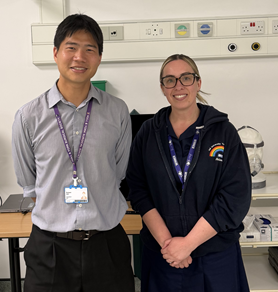
Now, thanks to a collaboration between Specialist Respiratory Nurses Helena Cummings and Charlotte Riches from the Severe Asthma Service and the Ear, Nose and Throat (ENT) Service at Castle Hill Hospital in Cottingham, these patients can be offered this new injectable treatment – known as a biologic therapy – called Dupilumab.
Helena, Senior Respiratory Nurse Specialist who leads the Severe Asthma Service, said: “Before we introduced this biologic therapy, patients with CRSwNP didn’t have access to these drugs. Instead, they had to take oral steroids which don’t come without the risk of side effects.
“But this is a revolutionary medicine which can have a transformative impact on patients’ lives and, nationally, we’re one of the first NHS organisations to start prescribing and using it.
“Access to this treatment will allow underlying disease to be treated and quality of life for patients to be improved.”
The new collaboration, led by ENT surgeon Mr Richard Gan, has introduced a more integrated approach to care, including multidisciplinary team (MDT) meetings, Pharmacy, dedicated rhinology clinics and joint ENT–respiratory clinics for patients with overlapping conditions.
Patients with CRSwNP undergo an assessment by ENT, supported by Severe Asthma Service in the early stages of service development, and, providing they meet specific stringent criteria and are able, are prescribed Dupilumab to self-administer at home by injection.
The treatment, only recommended by National Institute for Health and Care Excellence (NICE) for use in patients with severe CNSwNP and funded for use in the NHS in February, works by reducing the inflammation that drives nasal polyps and asthma. As well as the potential to improve quality of life, it is expected to reduce the need for repeated sinus surgery and long-term oral steroid use.
Helena said: “Introducing biologic treatment for patients with chronic rhinosinusitis with nasal polyps is a huge and exciting step forward for our region.
“Previously, to get any kind of relief, these patients had to be on oral steroids which can cause diabetes, eye problems and issues for the gut.
“Having seen the benefits biologics give to our severe asthma patients, it is an honour to support Mr Gan in the development of this revolutionary service.”