
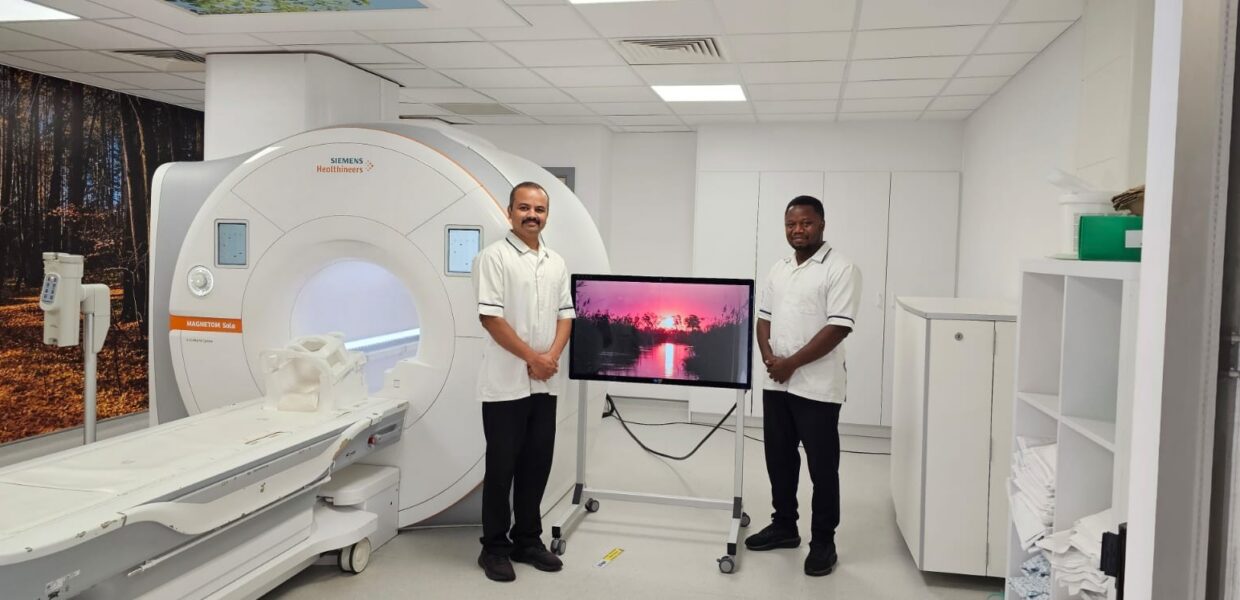
Patients undergoing MRI scans at Scunthorpe General Hospital are set to benefit from a major boost in comfort and care, following the introduction of new technology designed to ease anxiety.
The Nordic InVision system, funded through a £31,500 wish from our charity – The Health Tree Foundation – has now been installed and is already in use within the hospital’s MRI department. The innovative equipment is designed to support patients who experience claustrophobia, helping them feel more relaxed during what can often be a stressful procedure.
MRI scans can be challenging for many patients, particularly children and those unfamiliar with the confined space of the scanner. Up to 40 per cent of patients can experience claustrophobia during scans, which can lead to incomplete examinations or the need for sedation or general anaesthetic.
The new system aims to reduce this reliance by creating a more calming environment. Patients are able to watch films or television, listen to music, and view relaxing imagery, all while inside the scanner. Customisable lighting and immersive sound also help to create a more reassuring experience.
The technology also offers particular benefits for younger patients, with staff able to adapt the system to suit different age groups and needs. In many cases, it could help children complete scans without the need for sedation, supporting quicker and safer diagnosis.
Victoria Hird, Head of CT/MRI at Scunthorpe and Goole, said: “This system will greatly improve the service we provide to our patients, in particular the paediatric and claustrophobic patients. It will give patients a more relaxed MRI experience and allow them to have control of what they would like to watch or listen to.
“It will reduce the number of patients that have incomplete exams due to claustrophobia, and allow for faster and complete diagnosis for patients who would have normally struggled in confined spaces. We want to give our patients the best experience we can in our department, and this will go a long way to helping us provide that.” Colleagues say they are delighted to see the system now in place, with expectations it will significantly improve patient experience and make MRI procedures more accessible for those who previously found them difficult.