
Working in our Emergency Departments really is a job like no other.
Our ED teams get to see people at their best and at their very worst.
They literally have no idea what the next patient will bring, dealing with everything from common but serious conditions to the downright bizarre.
To give you a window into their world, one of our Communications Team spent two hours on the front desk at the Diana, Princess of Wales Emergency Department. Here’s what happened.
It’s 10.40am on a Monday morning when I arrive and there are already around 15 patients in the waiting room.
Behind the scenes in the department itself, it’s also a hive of activity, with the majority of the cubicles and treatment areas occupied by patients and the clinical team working hard to either get them to a point where they are well enough to be discharged or admitted into the hospital for further treatment.
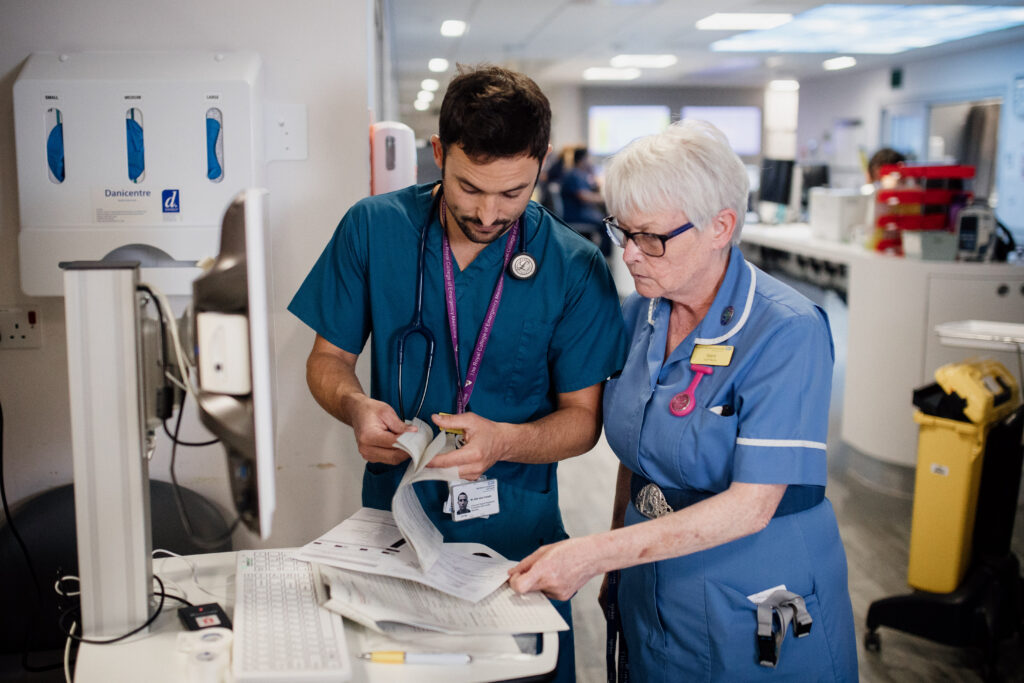
The front desk is manned by a Nurse Practitioner, who is triaging every patient who comes to the desk, supported by two members of the Emergency and Critical Care Administration team who then book in the patients to the most appropriate service. This could be our Urgent Care Service (UCS) for less serious issues, the main Accident and Emergency Department, or the Same Day Emergency Care department.
1043: The first enquiry I see is from the son of a patient who was admitted last night and he’s not sure where they are. The team look up their details and let him know where he needs to be.
1044: A relative of a patient has an insect bite they’re concerned may be infected and asks if someone can take a look at it while they are here. The Nurse Practitioner politely but firmly advises that this is something their pharmacist or GP is best placed to deal with and that it wouldn’t be appropriate to book them into the UCS.
1046: The next patient explains they fell off a ladder over the weekend and hurt their wrist. It’s been getting worse and the pain killers they have taken are making them feel ill. They’re booked in for someone to take a look.
1046: The next person to approach the desk has also had a fall. They advise that they fell two weeks ago, badly bruising themselves and, again, it’s not getting better. They’re booked in so we can check them over.
1052: The next patient has not had full movement of their arm for some time now. The Nurse Practitioner explains this is something which could be dealt with through the patient’s GP. They say they have seen their GP about this previously but fear it is becoming more painful and are concerned there’s an underlying issue. The patient is booked in but advised they could be in for a long wait.
1053: A patient arrives with a burn to their hand. They’re booked in.
1054: The next query is from a patient who has recently had surgery and is concerned it’s not healing as it should. They are booked in for the dressing to be changed and is then reviewed by one of the Ear Nose and Throat team, who are leading on their treatment.
1055: The patient has injured their arm after tripping and falling on some gardening equipment. They are booked in.
1058: The next person to approach the desk has a swollen hand and explains they have bent their thumb back the wrong way. We book them in to get it checked over.
1100: A patient arrives with a prescription that the pharmacy team has not been able to fill as the dosage isn’t clear. They’re directed to the staff base so that one of the clinical team can reissue it.
1103: The next patient to be booked in is experiencing gynaecological issues.
1104: A patient asks where they need to be, as they have been told to come in for an ultrasound but haven’t been given an appointment time. They’re directed to the department.
1107: Two families arrive in quick succession to visit relatives. They’re also directed to where they need to be.
1108: There’s a queue forming now but the team operates like a well-oiled machine, being both friendly and reassuring as well as super-efficient. The next patient is suffering from abdominal pain and gastric issues. They are booked in to be looked over.
1113: A patient approaches the desk complaining of dizziness. They’re booked in and take a seat nearby.
1115: Some worried parents are concerned about the area around their baby’s eye, which has been swollen for over a week. While the child is generally well, they’re booked in so we can make sure there’s nothing to be concerned about, as they don’t live locally.
1118: A patient asks to be booked into the fracture clinic
1120: The next patient has previously been treated for heart issues and feels unwell following a change in their medication, suffering from dizziness and heart palpitations. We book them in to get them checked over.
1123: A patient who wounded their arm a couple of weeks ago wants the wound to be checked over and redressed. The Nurse Practitioner suggests this is something that should be done by their GP, but they say they have not been able to get an appointment. She challenges them and suggests that they keep trying but the patient is eventually booked in – albeit they are warned they may have a long wait.

1124: A young child has fallen in the playground and cut their forehead open. The Nurse Practitioner is really reassuring, ensuring there are no signs of concussion, before letting them know it can easily be taken care of with some medical glue.
1126: A patient who has been bitten on the leg by a dog, causing bruising, says they have been told to come by their GP. The team don’t think the injury requires A&E care but the patient is booked in to be checked over in the UCS.
1127: A relative of a patient who has arrived by ambulance has come to join them. They’re taken through.
1127: A patient asks where they need to be, as they are booked in for a pathology test. The team direct them to the right area of the hospital.
1129: The next patient is very clearly in severe pain. They have seen their GP this morning and been referred to A&E. They are booked into A&E and given pain relief straight away.
1133: A parent returns to the department after being told the Pharmacy don’t have the medication prescribed to their child earlier. They’re directed to the paediatric team so an alternative prescription can be issued.
1134: Another fall. This time the incident happened weeks ago but they had hit their head and have since been vomiting and suffering headaches. They’re booked in.
1135: And another! This one happened the day before, and the patient’s arm is now swelling up and it’s very painful. They are booked in to have it checked over.
1136: A partially sighted relative has come in to be with a patient and the team walk them through the department to the patient’s room.
There’s a – very brief – lull and I ask the team if this level of demand is typical. Surprisingly, they say that Monday is often their busiest day and that it really ramps up in the early afternoon. There doesn’t seem to be a clear reason for this but it’s a pattern they see all the time.
We also talk about common misunderstandings which can lead patients to become frustrated.
The most frequent is when patients are referred from 111 and believe they have been given an appointment.
Unfortunately, that’s not how it works, and all patients referred through 111 will still be triaged when they arrive and seen in order of who requires care most urgently and – as the team say – that’s not a list you would ever want to be at the top of.
There’s also the added confusion that results from running two separate services from the same department – our UCS and our Accident and Emergency department.
The UCS is there to deal with more minor issues and, as a result, patients can often be dealt with and discharged relatively quickly, meaning people who may seem far less in need might be seen before someone waiting for A&E. If this happens to you, please don’t get frustrated. It’s not that they’re jumping the queue – it’s a completely different queue – and we wouldn’t be sending you to A&E if you didn’t need it.
The third one is the booking in desk. Lots of people see the ECC admin staff are ‘available’ and come straight to them – missing the signs which direct them to the Nurse Practitioner first. However, the admin staff don’t have the clinical skills to triage patients and have to direct them to the back of the queue.

1146: The department is starting to get busier, and a few people arrive at once. The next patient has been to see their GP about issues with their knee a couple of weeks ago and is awaiting an X Ray. However, it’s getting worse. They’re booked in to get it checked over.
1146: The next patient has been told to come in by the ambulance service. Their heart rate is high and they’re breathless. They’re booked straight into Same Day Emergency Care.
1146: A worried mum is concerned about their child, who has recently had their tonsils out and has a potential infection. The team do their best to reassure them and they’re booked in.
1151: A patient who is visiting family but lives outside the area has been advised by their GP to come to A&E for blood tests, as a result of an underlying renal condition. The team cannot access their GP record to assess what tests are needed and arrangements are made for the GP to get in touch with more details. The patient takes a seat while we wait for the information to arrive.
1154: The queue for the front desk is now to the door of the department. Next to be seen are a family who want their child to be assessed by paediatrician and referred to an audiologist due to issues with their hearing aid. The team consult the paediatric team, who explain this can be done by their GP but as they are overseas patients, they will be charged for the appointment. They leave to make the appointment with their GP.
1156: Another patient requires a fracture clinic appointment
1156: A patient comes to the window having been advised to come by their colleagues. They have been suffering from pain in their arm for a couple of months. However, they are advised this isn’t the right place to get it checked out and agree to make an appointment with their GP.
1158: 111 have advised the next patient to come to the UCS as they have been suffering with painful gynaecological issues and the pain has escalated. They are booked in.
1201: Next in the queue is a mum who has been advised by her GP to bring her child in, who is suffering from abdominal pain. They’re booked in and take a seat in the children’s waiting area. This has recently had a glass partition fitted to further separate it from the main waiting area and create a more pleasant and appropriate environment for families to wait in.
1202: The next patient is also a child who has injured their wrist. They’re also booked in and take a seat.
1203: A child in a wheelchair who fell last week and injured their leg is also booked in to have it looked over.
1203: A concerned dad has been advised to come by their GP as they are worried their child may have been suffering possible seizure activity. They are also booked into A&E for further tests.
1204: A relative arrives to visit a patient who was brought in yesterday. The team find out where they are being treated and direct them to where they need to be.
1205: A patient arrives with a nasty cut to their hand. They’re booked in and advised to keep it elevated and apply pressure to the site until they’re called in, to help stem the bleeding.
1206: The last person in the queue has a badly hurt ankle. They’re booked in so we can take a look.
1208: Another patient arrives and asks to be booked into the fracture clinic
1210: The next patient has also been referred to the department by their GP with severe abdominal pain. They are booked into Same Day Emergency Care.
1212: A patient with a history of Crohn’s Disease has arrived with a suspected flare up. The team debate whether they can be referred straight to Same Day Emergency Care but, until it can be confirmed that their symptoms are not the result of an infection, they need to be seen in A&E.
1216: Here’s one that you don’t get every day. A toddler comes in with a tortoise bite. Everyone is sure they will be okay but that it’s best to get it checked out just in case.

1218: A patient under the age of 45 explains they have been having chest pain all morning. They don’t have a history of heart or lung issues, so they’re seen in the UCS to rule out underlying issues. Had they had a history of heart or lung issues or were over 45, they would have been booked into Same Day Emergency Care straight away.
1222: An elderly patient is brought in with eye issues. They’re booked in and take a seat.
1228: The next arrival is very sobering. A relative comes to the desk at first and says that they are concerned the patient may have taken a deliberate overdose. The patient is conscious and able to come to the desk themselves, so the team ask to speak to them directly so they can be booked in. They also ask them to sit where the team can observe them in case the situation escalates.
1230: The next person in the queue has suffered an allergic reaction to collagen. They’re booked into the UCS.
1231: Another relative arrives to visit a patient and the team direct them to where they need to be.
1232: An apologetic mum has been advised to bring her baby in, as they have been vomiting a lot. She doesn’t think they need to be there, but the team say it’s better to get it checked out and refer her to the paediatric team for baby to be assessed.
1234: A relative of a patient being treated in Resus arrives. The team take them through to their loved one.
1238: Language can sometimes be a barrier and that’s the case with the next patient who has injured their knee but is struggling to explain what the issue is. As well as official translating services, the team has a variety of ways of working around this, including using text apps and Google Translate, as well as speaking with relatives or friends of the patient, both in person or over the phone. They get to the bottom of it and the patient is booked in.
1242: The next patient to approach the desk has injured their foot. They’re booked in to be checked over.
1242: A patient has arrived with a worried colleague. They have high blood pressure and are seeing flashes of light in their eyes. We book them into Same Day Emergency Care.
1242: A relative has been told their loved one has been brought to the Emergency Department. The team find out where they are being treated and get them to where they need to be.
1246: The next patient to arrive recently suffered an overdose and has kidney pain. They’re booked in to be checked over.
1247: A GP has referred the next patient, as they are concerned they may have a pulmonary embolism – a blood clot on the lung. In order to diagnose the patient, they need to have a scan, so they are booked in and we start the process.
1247: The team take a call from a patient who wants a copy of their medical records. This isn’t something they can arrange, but they put them in touch with our Medical Records team.
1247: The next patient to arrive has injured their knee. The team books them in.
1249: An elderly patient who has been treated and is ready to leave had booked a ‘take and return’ with a taxi firm but is unsure how to let them know they are ready to go. They have a card for the firm, so the team ring them and arrange for the patient to be picked up. They are not sure where to wait, so the team directs them to where they need to be.
1235: The next person to approach the desk has an appointment on a ward but isn’t sure where to go. The team point them in the direction of our amazing volunteers, who are ready and waiting to assist people in the main entrance.
1254: They also direct the next person to the volunteers. They have popped in to enquire if there are any jobs currently available. If you’re interested, all our current vacancies are advertised here: Vacancies – NHS Humber Health Partnership Careers and Recruitment
1255: We get the information through from the GP of the patient down here visiting family, who has been advised they need urgent blood tests. Now we know what they need, they are booked in.
1257: The patient who needed the taxi checks back in to make sure they are waiting in the right place. They’re directed back to where they need to be.
1258: The next family to arrive have been advised to come by their GP, as their child needs to have some diagnostic tests. They are booked in.
1258: The final patient I see being booked in before leaving the department is a victim of domestic abuse. They have a leg injury and arrive with their child. They are booked in and seated where the team can keep an eye on them. They will also be discreetly offered support when they go through to the clinical team.
It’s been an eye-opening visit – both in terms of the level of demand coming through the door and the wide range of issues the team needs to deal with.
I don’t have too much time to say thank you and goodbye, as the next patients are already arriving but, before I leave, I also go and check in with the booking in team running Ambulance Handover.
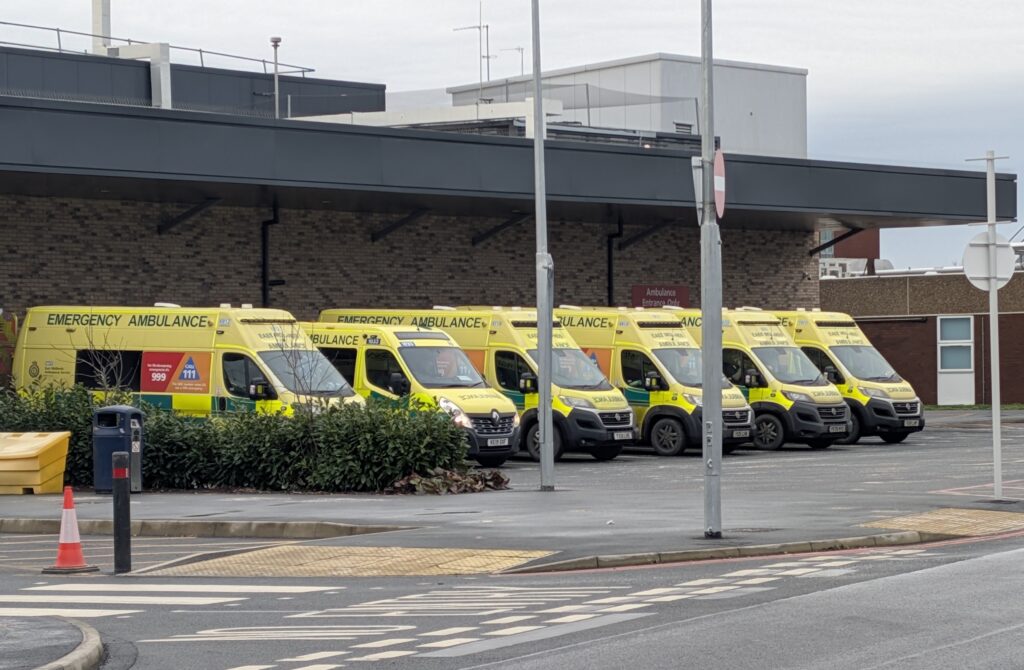
In addition to the patients arriving at the hospital under their own steam and checking in at reception, we have also had more patients arriving by ambulance – eight during the time I have been in the department.
These patients have been brought in with a wide range of issues from suspected strokes to severe abdominal pain – and there’s another on the way in.
It’s time to step away and leave them to it…