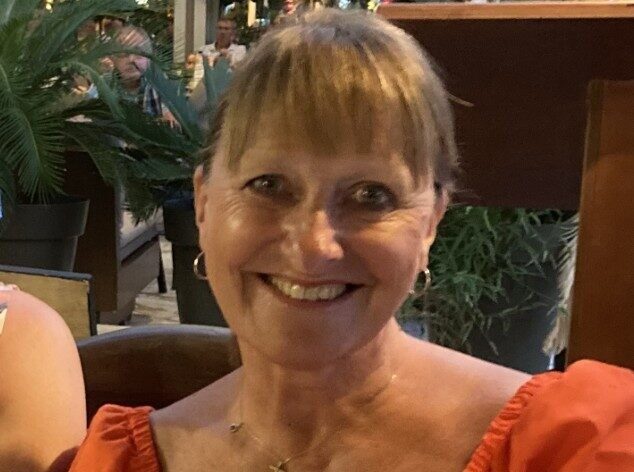
A former local authority manager from Scunthorpe says she had ‘nothing to lose and everything to gain’ when she signed up to take part in a hospital-based research trial.
Angeline Saunderson, 63, was invited to take part in a cancer trial at the Queen’s Centre for Oncology and Haematology in November 2024.
The invitation came around 18 months after she was diagnosed with triple negative breast cancer (TNBC) for the second time in her life; several rounds of chemotherapy had been keeping this secondary cancer under control but by October 2024, scans picked up a small growth again.
Angeline had sadly lost both her sister and her father to cancer in short succession several years earlier, and had previously been treated for TNBC herself in 2021. So when she was offered the chance to take part in a specific trial to tackle her cancer, she jumped at the chance.
“I strongly believe that, without trials, we will never make progress towards eliminating cancer or managing it like a chronic illness, so I was up for doing my bit. Years earlier when my sister was fighting cancer, we had hoped she would be suitable for a clinical trial but it turned out to be too late for her, so the loss of my sister also played a part in my decision to get involved.”
Angeline started the two-year trial in November 2024, making the trip over to Castle Hill Hospital for chemotherapy and a trial drug every two weeks for the first six months, then just the trial drug each fortnight thereafter. On top of that, there are fortnightly blood tests too, but it’s a commitment she’s willing to make, she says, for the clinicians’ investment in her.
“I agreed to the trial knowing that it was a commitment for the next two years, but I felt that if the trials team here were willing to invest in me, in stabilising my illness and giving me a good quality of life, then that was a benefit to me, so it was really no bind at all.”
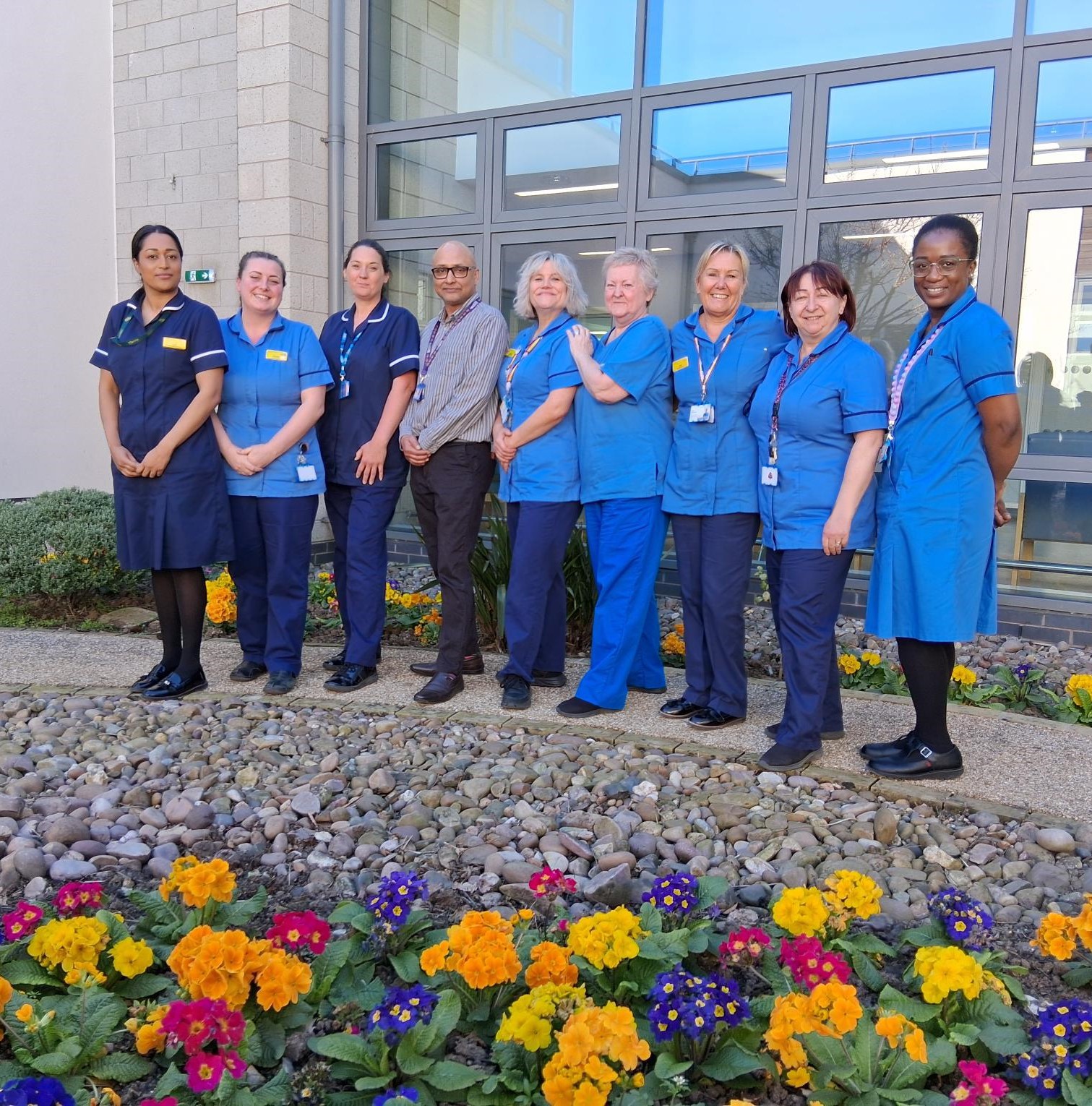
Eighteen months in, under the watchful eyes of the academic oncology and haematology trials unit*, Angeline says the trial has been going well.
“I had a few dodgy days near the start, but that’s to be expected, and all along the way I’ve had the support of a really skilled oncologist and close monitoring by the nursing team so I’ve never felt alone and always had someone to speak to if I’ve had any concerns.
“I’m very grateful for the fact that this trial has essentially extended my life far beyond what might be expected; my life has continued as normally as is possible, we still go out, we go on holiday, and make memories with my wonderful 93-year-old mum. Cancer is not my life, it’s just a tiny part of it.
“I believe very strongly that taking part in research is the gift you can give for free; my participation doesn’t just help me, but it will help other patients like me in the future and will also help the clinical teams to learn and develop better treatments.
“My trials team are just so helpful and cheerful, they are a part of my life which I never knew I’d need or want, but now I wouldn’t be without them.”
Angeline‘s message come as new data reveals hospitals across the Humber to be at the forefront of clinical research in the region.
Working with academic partners and Hull York Medical School, NHS Humber Health Partnership is among the best in the whole of the North East and Yorkshire region for recruitment into clinical trials.
Across Hull Royal Infirmary, Scunthorpe General Hospital, Castle Hill Hospital, Goole & District Hospital, and Diana Princess of Wales and Hospital in Grimsby, a total of 15,824 participants were enrolled in research projects and clinical trials between 1 April 2025 and 31 March 2026, second only to Bradford with 16,961.
This research takes many different forms and is open to a huge variety of ages, backgrounds and clinical conditions, James Illingworth, Research and Development Manager for NHS Humber Health Partnership explains:
“The Hull and Humber region has a fantastic reputation as far as clinical research goes; it’s something we pride ourselves on and our local hospital teams are always looking for opportunities to push the boundaries of research and offer our patients the chance to do the same.
“Many people think of drugs and medication when we talk about clinical trials, but in actual fact, this makes up only a small proportion of our research work. Many others investigate the effectiveness of therapeutic work with patients or use questionnaires and patient data to look for trends or to influence treatment options going forward.
“Clinical trials won’t be suitable for everyone, but being able to offer local people opportunities to get involved in research is really important, not only in terms of improving the health of the local population, but also in discovering and developing cures, providing access to new and emerging treatments, understanding how certain conditions can affect people, and even being able to attract the best healthcare staff and academics to our region.
“We value every single person who helps us on our research journey and who has helped to contribute to the past year’s success, researching into conditions such as COPD, inflammatory bowel disease, diabetes and genetic issues in newborns to name just a few.
“It’s great to think that people here in East Yorkshire and Northern Lincolnshire could be contributing to life-changing advances in care and treatment, making a difference to thousands upon thousands of people not just in our area but across the world, and that’s something we’re hugely proud of.”