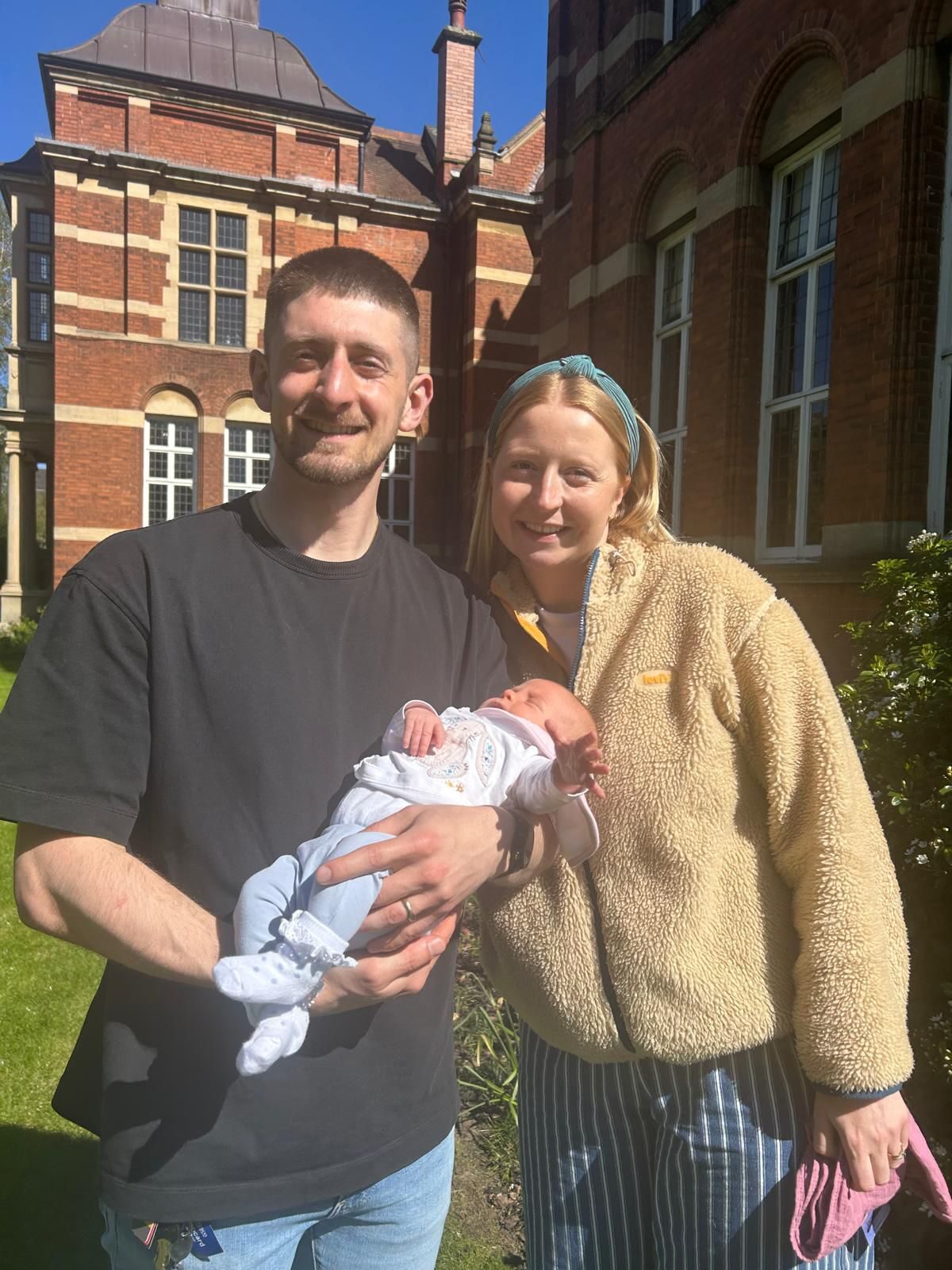
A couple from Beverley have expressed their gratitude for the opportunity to take part in an innovative newborn screening programme.
Children’s occupational therapist, Emily Pyatt-Williams, and her doctor husband, Jonnie, were the first in Hull and East Yorkshire to join the Generation Study.
The Generation Study is a national research study led by Genomics England in partnership with NHS England. Hull is one of over 40 NHS Trusts and organisations nationally to be taking part. It seeks to screen a total of 100,000 newborn babies for more than 200 rare genetic conditions using genome sequencing based on blood samples normally taken from the umbilical cord just after birth.
The first-time parents had considered paying privately to screen baby Primrose, born last month, for a range of genetic conditions before hearing that a research team based at Hull Royal Infirmary was looking to join the national newborn screening project.
Emily explains:
“As a children’s occupational therapist, I work with a number of children who are living with complex conditions including the genetic condition, spinal muscular atrophy (SMA).
“On a daily basis, I see how this affects those children and the impact it has on their wider families.
“During pregnancy, we had been thinking about paying privately for screening tests which would have cost us thousands.
“At the same time as I’d been doing my research, I’d also heard about the Generation Study which screens for more than 200 rare but treatable genetic conditions. I mentioned it to my community midwife back in October, and I must have timed it just right; she put me in touch with Sarah Collins who was looking to join Hull up with the national NHS-led study, so I told her we’d be really interested in joining before the hospital had even confirmed it was taking part.”
Sequencing through the Generation Study identifies treatable, rare conditions shortly after a baby is born rather than when symptoms might appear later in childhood. This means families can access the right support, monitoring, and treatment from the NHS much earlier for these conditions. In turn, effective early intervention can help to prevent longer term health problems associated with certain conditions, keeping children out of hospital, and helping them live healthier lives.
Sarah Collins, research lead midwife based at Hull Women and Children’s Hospital says:
“We had been looking at joining this study for a while, so it was great to speak with Emily as she already knew all about it and was really keen to sign up.
“We have seen quite a rise in interest in newborn screening in recent months and this has been helped to some extent by recent media coverage.
“Here in Hull and the East Riding, we only started registering families in January of this year but we’re really proud to say we have already seen 372 babies and families join the Generation Study, and we expect that figure to continue growing rapidly over the weeks and months to come.”
Emily continues:
“Taking part in the Generation Study gives us huge peace of mind. Taking a blood sample from the cord made no difference to Primrose, it didn’t prevent us having skin to skin, and I still had the birth that I wanted.
“Thankfully, our results have since come back and no conditions are suspected,but we had the reassurance that if anything was picked up during the screening process and Primrose needed treatment, she could start that straight away, giving her the best chance of the best possible outcome.
“The team involved have been fantastic, very responsive to our questions, and really looked after us all. We would encourage anyone who’s expecting a baby to give their child the best possible start by signing up the Generation Study and taking advantage of this really important, potentially life-changing opportunity.”