
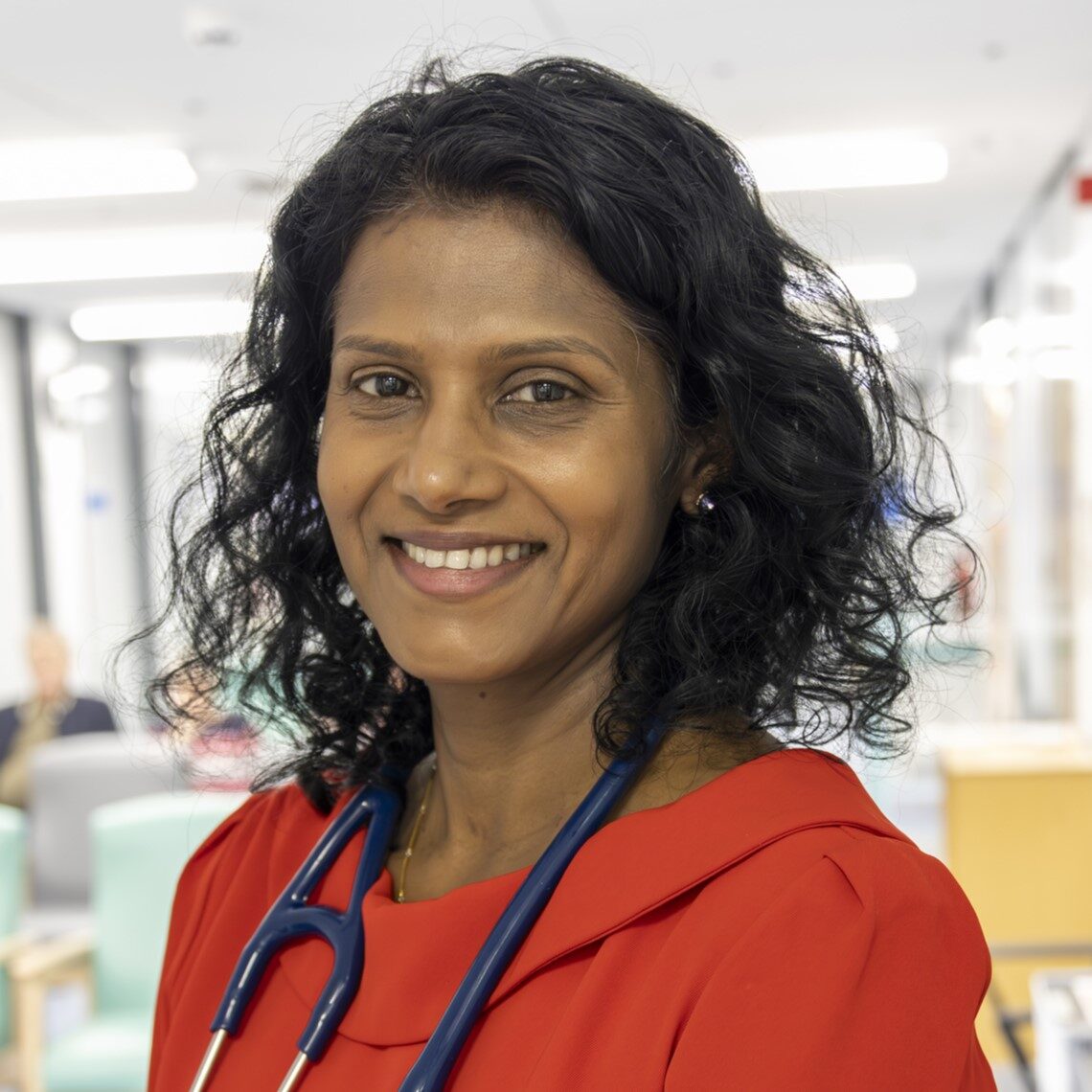
Unique patient support designed to deliver long-term quality of life
Being diagnosed with an abdominal aortic aneurysm (AAA)* wasn’t quite the start to retirement that former factory manager Lionel Harrall from west Hull had expected.
When it was first noted, his AAA measured just 3cm in size, but by late 2024, after several years of monitoring, it had grown to a size which now required surgery.
As they grow, AAAs have the potential to burst. Should this happen, the rupture usually proves fatal in 8 or 9 out of every 10 cases, so surgery was considered for Mr Harrall as a way to repair his AAA and prevent this happening.
But before Lionel could have his operation, pre-surgical health checks and the vigilance of consultant vascular perioperative physician, Dr Sasi Pathmanathan, spotted another health issue that would need to be addressed.
“Ten days before my 70th birthday, I went into Hull Royal Infirmary for an appointment with Dr Pathmanathan, where she told me about my liver problem.
“A series of recent health checks including a liver scan had picked up liver disease which I wasn’t aware of, but which made it too risky to go ahead with the surgery for my aneurysm at that time.
“It hit me between the eyes. I’d been a regular drinker for the last 50 years, but as I couldn’t see the damage the alcohol was doing, and at that stage I’d had no ill effects, I was completely unaware of just how unhealthy my liver was.
“When I was told I needed to improve my liver health before I could have my operation, I asked, “Well, what if I just stop drinking altogether?” Dr Pathmanathan told me that would be perfect, and so that’s what I did. I didn’t touch another drop after that, not even to mark my 70th birthday, and I haven’t drunk since.”
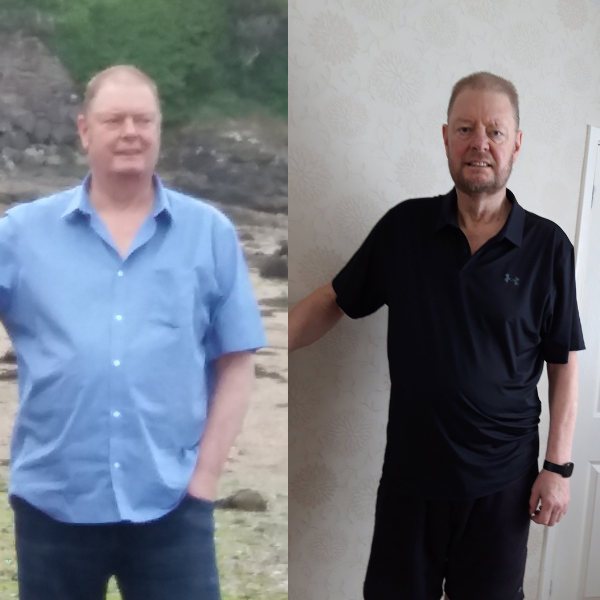
Unlike many other organs of the body, damage to the liver can be reversed if caught early enough. As well as improving Lionel’s liver health, cutting out alcohol also led to a two-and-a-half stone weight loss and was one of the crucial lifestyle changes which enabled his AAA repair to be given the green light.
Lionel (pictured below, before and after his surgery) is one of hundreds of patients Dr Pathmanathan has helped across the Humber region through an approach known as ‘prehabilitation and medical optimisation’. Her job is to review patients who are listed for major vascular surgery to ensure their bodies are fit and healthy enough to cope with the demands placed upon them by surgery, and to deliver some ‘tough love’ if not.
Dr Pathmanathan carefully reviews each patient to look at their risk factors such as obesity, smoking, alcohol intake, fitness, diabetes and other pre-existing health conditions, and then makes recommendations to give patients the best possible chance of surgical success.
Her service is believed to be unique in England as, while other hospitals have similar surgical liaison type roles, she is understood to be the only medical consultant directly employed by a vascular surgical unit, supporting each patient throughout their entire surgical journey and beyond. The creation of this role is reflective of the vascular surgical department’s ongoing commitment to innovation and improving patient care and well-being.
Dr Pathmanathan says:
“Surgery can be very stressful for the body, so it’s important for people to be as fit and as healthy as they possibly can before they have their operation.
“A high body mass index (BMI) is associated with poorer surgical outcomes and complications; operations are more risky and wounds can be slower to heal, for example, while a smoker is more at risk of post-operative chest infections or a heart attack than a non-smoker.
“It can be a difficult conversation to have with some patients, telling them that the operation they need is too risky if they don’t change their lifestyle and behaviours, but for a lot of people, it can also be the wake-up call they need.
“My role is to really get to know each patient, to connect them with support services, to coach them and help them introduce individual lifestyle changes that are realistic and achievable. The types of changes required will vary from person to person, but could include increasing their physical activity, healthy eating, or stopping smoking, for example, all of which will put them in a much better place for surgery.
“Patients who undergo vascular surgery are often older patients; not everyone is in a position to go running or go to the gym, so it’s about understanding each person and suggesting reasonable, achievable steps they can take to improve their health and prepare them for surgery. We focus on things they enjoy and on what they can do rather than what they can’t, so even if it’s doing a bit of gardening or climbing the stairs more often, personalised care with an individual plan for each person is the key to success.”
Once Dr Pathmanathan has been asked to see a patient by the surgical team, she remains a part of that patient’s journey throughout.
“Even though I’m not performing the operation myself, I’m in touch with my patients, I know how they’re doing in the run up to surgery, and I’ll go see them on the post-surgical ward and help deal with any medical complications that may occur.
“In the short term, my role is about getting people fitter for surgery, but in the long term it’s about helping people to enter their older years with a better quality of life.
“Our aim is to see those people remain independent for as long as possible, otherwise there are knock-on implications for their own physical and mental health, for their family and loved ones, and for health and social care services more broadly.”
Lionel Harrall says it was Dr Pathmanathan’s firm but fair approach combined with his own willpower and the support of his family which has helped him through.
“My wife, Dot, and I stopped smoking in our 50s; we had both smoked since we were 14 and she just set a quit date one day. I told her if she could stay quit for two weeks, I’d do the same, and to my surprise she managed it, so I smoked the rest of the cigarettes I had and then never touched another; that was at age 54.
“When Dr Pathmanathan told me I needed to make lifestyle changes for my surgery to have the best chance of success, it was that same mental fortitude I drew on; I’d done it once and I was sure I could do it again.”
Lionel’s surgery took place at Hull Royal Infirmary in April last year, and he’s full of praise for the two women who continue to support him.
“Dot is an absolute treasure. She’s always looking at my diet and making sure I have the right foods and nutrition to keep me healthy; she and the family have been fantastic and they’re very proud of me.
“Dr Pathmanathan has been incredible throughout. From that first meeting in clinic, to calling me on my 70th to see how I was doing and all her help post-surgery, I know if ever I need anything, she’s on it straight away.
“In so many ways, I’m not sure I’d be where I am today if it wasn’t for her.”
Now an incredible four stones lighter and still tee-total, Lionel is continuing his rehabilitation and has just started hitting the gym once again.