

What is a Major Trauma Centre?
A Major Trauma Centre brings together specialist clinical teams, advanced diagnostics, surgery, critical care and rehabilitation to provide comprehensive care from the time a patient arrives at hospital through to their recovery.
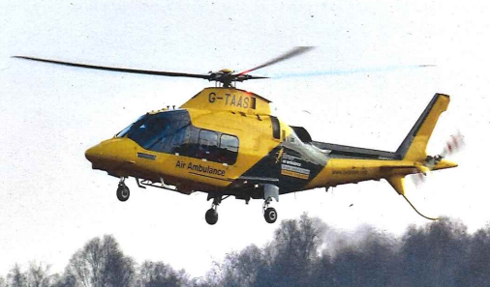
Major Trauma Centres bring together specialist teams and facilities to provide comprehensive care for severely injured patients. This includes emergency assessment and resuscitation, specialist surgery, critical care, rehabilitation and ongoing support throughout recovery.
Major Trauma Centres work as part of a regional network, ensuring patients are taken to the most appropriate hospital for their injuries and receive the right specialist care as quickly as possible.
Patients with major trauma may be taken directly to Hull Royal Infirmary by ambulance or air ambulance when their injuries require the specialist teams, facilities and 24-hour care available at a Major Trauma Centre. Patients may also be transferred from other hospitals within the regional trauma network when specialist treatment is required.
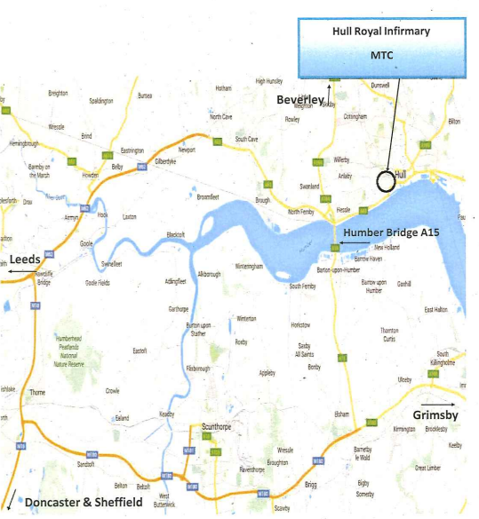
Each Major Trauma Centre is affiliated with its own Trauma Units. When combined, these form a Major Trauma Network. Our network is known as the North Yorkshire and Humberside Operational Delivery Network and comprises of:
- Hull Royal Infirmary (Major Trauma Centre)
- Diana Princess of Wales Hospital, Grimsby (Trauma Unit)
- Scunthorpe General Hospital (Trauma Unit)
- York Teaching Hospital (Trauma Unit)
- Scarborough Hospital (Trauma Unit)
What is Major Trauma?

What is Major Trauma?
Major trauma means serious or life-threatening injuries that require urgent and specialist medical care. These injuries can affect one or more parts of the body and may require treatment from several specialist teams. Major trauma can result from events such as serious road traffic collisions, significant falls, workplace or industrial accidents, assaults, or other incidents causing severe injury.
Patients with major trauma may have injuries involving the brain, spine, chest, abdomen, pelvis, bones, blood vessels or multiple areas of the body. Rapid assessment and treatment are essential to identify life-threatening injuries, prevent further harm and give patients the best possible chance of recovery.
Our Team
Major Trauma care at Hull Royal Infirmary is provided by a highly skilled multidisciplinary team who work together to deliver rapid, specialist care for patients with serious or life-threatening injuries.
The Major Trauma Team brings together expertise from across the hospital, including Emergency Medicine, Anaesthetics, General and Trauma Surgery, Orthopaedics, Neurosurgery, Critical Care, Plastics, Vascular Surgery and Radiology. Major Trauma Coordinators and rehabilitation professionals also play an important role in the patient’s care.
Following the initial assessment and stabilisation, patients are cared for by the specialist teams appropriate to their injuries. The Major Trauma Nurse Specialists provide coordination and oversight throughout the patient’s journey, working closely with clinical and rehabilitation teams.
Patients may also be supported by physiotherapists, occupational therapists, speech and language therapists, psychologists, dietitians, pharmacists and other specialist professionals.
The team involved in each patient’s care is tailored to their individual injuries and needs, ensuring care is coordinated from emergency treatment through to rehabilitation, recovery and discharge.
Rehabilitation and discharge
Recovery from major trauma continues beyond the treatment of the initial injuries. Rehabilitation begins early and helps patients regain strength, mobility, independence and confidence.
Our multidisciplinary rehabilitation team works with patients, families and specialist clinical teams to develop a personalised plan. This may include physiotherapy, occupational therapy, speech and language therapy, psychology, dietetics and specialist nursing support.
Where appropriate, rehabilitation may continue closer to home through a specialist rehabilitation unit or community services. Discharge planning starts early and considers each patient’s medical needs, mobility, equipment, medication and support at home.
Our aim is to ensure every patient leaves hospital safely with the right support to continue their recovery and maximise their independence.
Repatriation
Repatriation is the transfer of a patient who has received specialist major trauma care back to a hospital or service closer to their home when they are clinically ready to continue their recovery.
As the Major Trauma Centre for the Humber and North Yorkshire Major Trauma Network, Hull Royal Infirmary works closely with hospitals and services across the region to support safe and timely repatriation. Once specialist treatment is complete, the clinical team will assess the patient’s ongoing needs and identify the most appropriate place for their continued care. This may include a local acute hospital, Trauma Unit, rehabilitation service or community setting. Repatriation is planned with the patient, their family or carers, and the receiving team. Relevant clinical and rehabilitation information is shared to ensure a safe and seamless transfer. The Major Trauma team works closely with the wider network to support patients to continue their recovery as close to home as possible.
Visiting Times
We understand that having a family member or friend admitted to hospital following major trauma can be a very difficult and worrying time. Keeping in touch with loved ones is an important part of recovery, and we encourage patients to have family and friends involved in their care wherever possible.
The usual visiting hours for the Major Trauma Ward at Hull Royal Infirmary are 11am to 8pm, seven days a week.
Visiting arrangements may need to change depending on the patient’s condition, clinical circumstances or the needs of the ward. We recommend contacting the ward before travelling to confirm the current visiting arrangements.
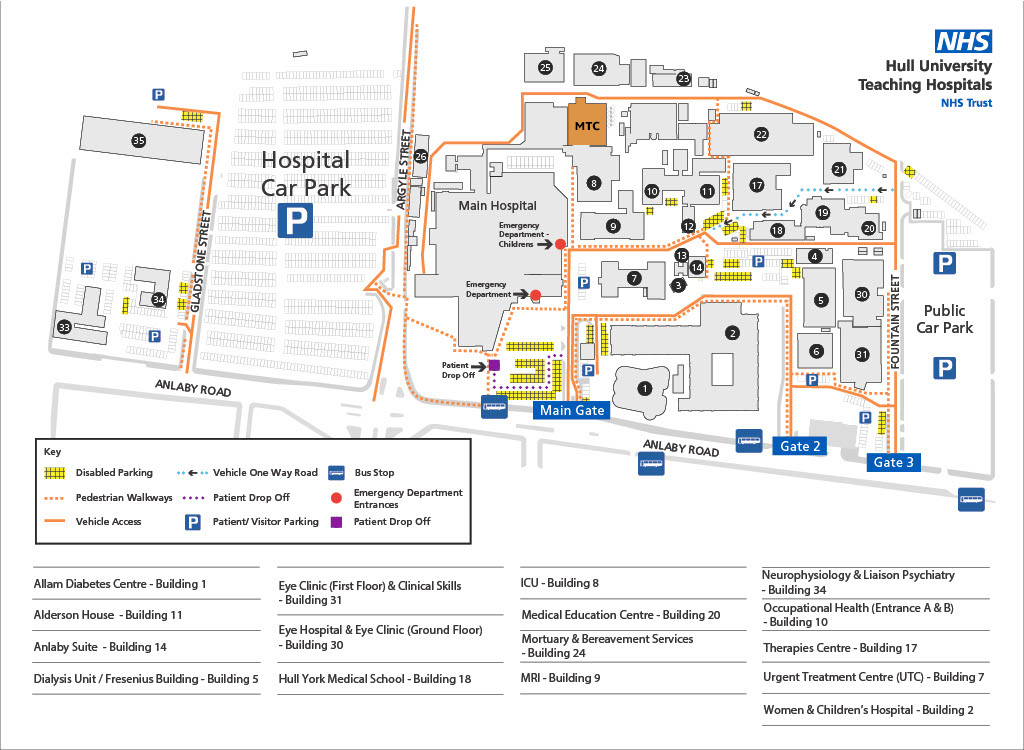
The MTC is on the 1st floor in the orange building on the site plan below.
When you visit
Major trauma patients can become tired easily and may need periods of rest during the day. Please be mindful of this when planning your visit.
There may also be occasions when visitors are asked to wait outside the ward while the clinical team is providing care, carrying out procedures or discussing treatment. We appreciate your patience and understanding at these times. If you are visiting a patient who is seriously unwell, the number of visitors may need to be limited. Please speak to the nurse in charge if there are particular circumstances that you would like us to consider.
Supporting your relative
Family members and friends can play an important role in recovery following major trauma. If you have concerns about your relative’s care, rehabilitation, emotional wellbeing or plans for discharge, please speak to a member of the team. Where appropriate, patients and their families will be involved in discussions about treatment, rehabilitation and discharge planning. We recognise that major trauma affects the whole family, not just the patient. Our Major Trauma team is here to support patients and their relatives throughout their hospital stay.
Further Information
Our team have produced an in-depth leaflet for patients and anyone with a loved one on the unit:
Information leafletContact Us
Major Trauma Centre
We are based on Ward 38 at Hull Royal Infirmary in the main hospital building (1st floor next to ICU)
