
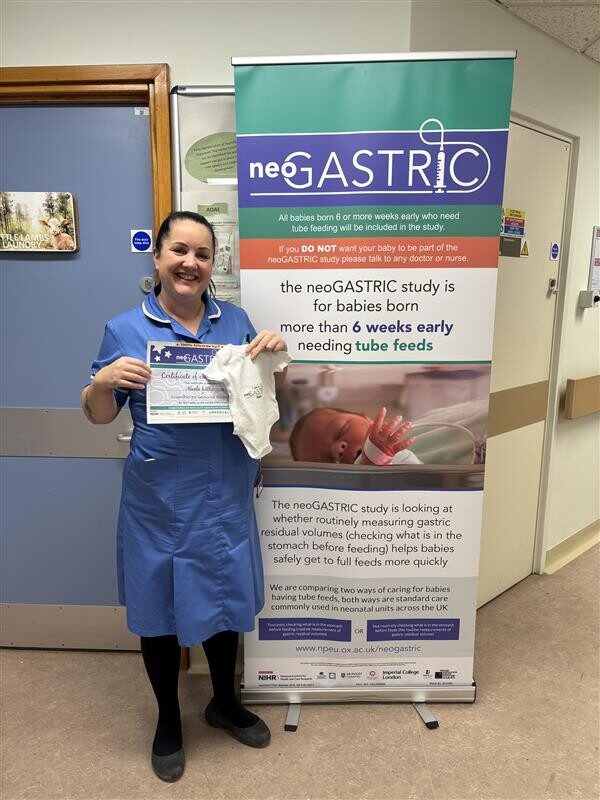
Scunthorpe General Hospital has reached a major research milestone by recruiting the 7,000th baby worldwide into an international neonatal study.
The neoGASTRIC trial, running across the UK and Australia, is a large, multi-centre clinical trial investigating whether avoiding routine measurement of gastric residual volumes in preterm babies can help them reach full milk feeds more quickly, without increasing harm.
The findings have the potential to change national and international neonatal feeding guidance, influencing care for thousands of babies in the future.
Scunthorpe General Hospital, which is a small Level 2 neonatal unit, opened to the trial in December 2024 with an initial recruitment target of 15 babies (approximately one to two per month). Since opening, the unit has more than doubled this target, successfully recruiting 34 babies to date.
This achievement is particularly notable due to the high level of staff engagement across Scunthorpe’s Neonatal Intensive Care Unit (NICU), with:
- 17 nurses and four doctors trained to recruit and randomise babies
- Excellent data collection and trial compliance
- Strong whole-team involvement and enthusiasm for research.
Diana, Princess of Wales Hospital in Grimsby has also contributed to the trial. With the same recruitment target, the unit has recruited 51 babies so far, with just six nurses trained to recruit and randomise.
Jasmine Stares, Paediatric Research Nurse, said: “The success of neoGASTRIC locally highlights the important role that nursing-led research and frontline clinical teams play in shaping future neonatal care. Staff across both units have embraced the opportunity to be directly involved in meaningful research that may improve outcomes for preterm babies for years to come.”
Together, the two Level 2 neonatal units have recruited 85 babies in just over one year.
Hull University Teaching Hospitals NHS Trust is also participating in this study. They started the trial in September 2023 and have recruited 151 babies to date. As the trial approaches its recruitment close at the end of February, the contribution from Scunthorpe, Grimsby and Hull highlights the strength of research-active clinical teams within Humber Health Partnership. Their efforts are helping to generate evidence that could enhance feeding practices, and improve the health and wellbeing of preterm babies across the world.